Fabrication Drawing : A complete guide
What are Fabrication Drawings?
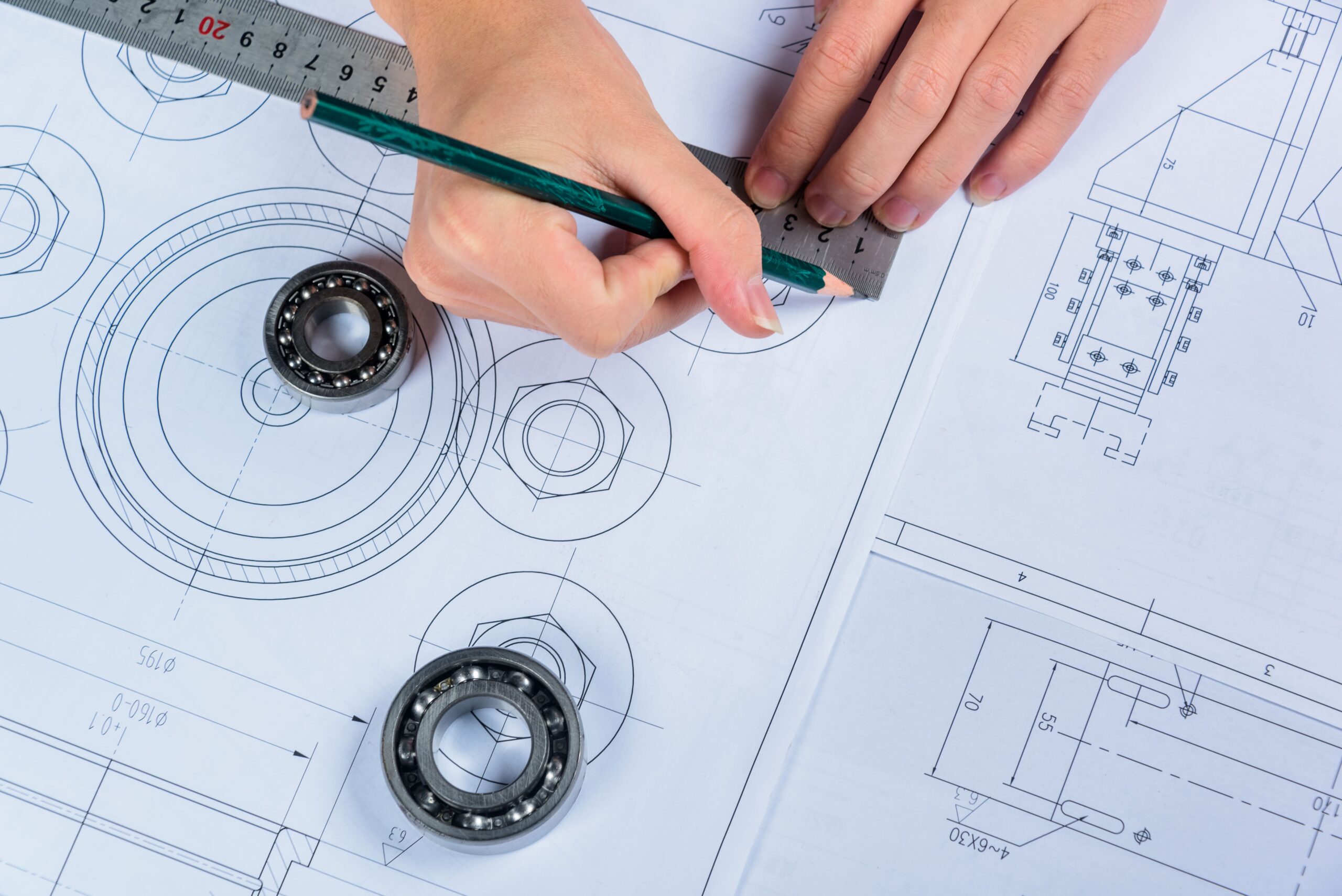
- Fabrication drawings are technical documents that specify the structural components of a product.
- In simple terms, they show exactly how a part or component should be built. Unlike design drawings, which mainly give an overall look or concept of the product, fabrication drawings cover every tiny detail, including dimensions, measurements, tolerances, welding symbols, and more.
- The goal is to provide complete information so the manufacturer can work without confusion.
- A clear structural fabrication drawing bridges the gap between design and fabrication, ensuring every cut, weld, and assembly is done accurately.
Industries That Use Fabrication Drawings
- These drawings are used everywhere physical products are made. In construction, they guide welders and fabricators working on beams, staircases, or trusses. In manufacturing, machine operators rely on them to cut, shape, and assemble components for machines, tools, or vehicles.
- From small workshops to giant industries like aerospace, where precision is critical, fabrication drawings act like an instruction manual, ensuring production is safe, accurate, and meets the intended design

1. General Arrangement (GA) Drawings
Demonstrates the overall layout of a structure or assembly. These drawings help visualize the project and how different parts interact. They include installation guides, structural designs, and support approval processes to ensure the project is successfully carried out in all phases.
2. Single Part Drawings
Single-part drawings are basically the workshop drawings that focus only on one component at a time. They highlight the key details like dimensions, tolerances, and the material grade for that piece. These drawings are super important because every component needs to be made accurately so it fits perfectly when the full assembly comes together. Industries like aerospace, automotive, and others that demand very high precision rely heavily on these.
3. Assembly Drawings
As the name implies, these drawings show how different parts come together, the order of assembly, where things need to be fastened, and what needs to be welded. They are widely used when building machinery, big HVAC systems, or structural assemblies. The main goal is to make sure the design, fabrication, and manufacturing teams are all on the same page and can work together without confusion.
4. Detail Drawings
The detail drawings reveal information about a fabricated member, made up of several individual parts. In short, these fabrication drawings show how plates, stiffeners, or other components come together on a column (for suppose). The drawings consist of exact dimensions, weld symbols, bolt details, and information on the positioning to help the fabricator learn how to put all the components together in place.
5. Metal Fabrication Drawings
As the name says, metal fabrication drawings give the step-by-step guidelines needed for welding and putting parts together. They show things like the type of welds, the material specs, joint details, and the exact dimensions needed to make the parts fit right. With these drawings in hand, welders can carry out the job properly, even when the assembly looks tricky or a bit complex.
6. Elevation Drawings
In short, elevation drawings are all about the vertical layout of a part or structure. They basically show how it looks when viewed from the front or side — like the height and overall face of the design compared to a flat surface. These drawings usually include height measurements, design details, and how things like doors, windows, or facades are arranged.
They’re mainly used to help manufacturers or builders visualize the part before making it. Elevations often come with section cuts too, which are super helpful for planning the work and executing it properly on site.
Welding Symbols in Fabrication Drawing
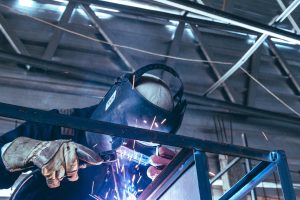
Welding is one of the most important steps in metal fabrication, and welding symbols act like a universal language between engineers and welders. They show exactly what kind of weld is needed, where it goes, and how it should be finished. Instead of long paragraphs of instructions, a few simple symbols can tell a welder everything they need to know, helping to get the job done right and consistently every time.
1.Fillet weld: A triangular weld that joins two surfaces at right angles. You’ll often see this in frame structures or general structural work.

- The process starts with a pressure pump that builds water pressure far higher than what comes out of a normal hose.
- This water is then pushed through a tiny nozzle, usually made from materials like sapphire or ruby, to form a high-speed jet.
- The velocity of the stream is so high that it can cut through many materials directly.
- When tougher materials like metals, ceramics, or composites are involved, abrasive particles (commonly garnet) are added into the water stream. This creates a sandblasting effect that helps cut through them.
- The cutting head can be moved in different directions, making it possible to achieve fine details and complex shapes.
Applications of Waterjet cutting: Waterjet cutting finds its place in aerospace, automotive, architecture, and also in the stone and marble industries. It’s especially popular for glass cutting, custom fabrication, artistic designs, and prototypes where heat damage just can’t be allowed.
Materials: It can cut almost any material, including metals, stone, ceramics, composites, glass, plastics, rubber, and even food products. This makes it one of the most versatile cutting technologies available.
What is Plasma Cutting?
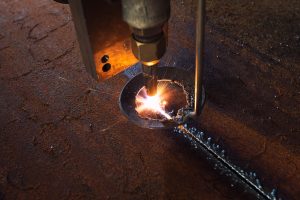
Plasma cutting works by directing a jet of ionized gas, heated to over 20,000°C, onto the material you want to cut. The intense heat melts the material, and the force of the gas blows the molten material away, leaving a clean cut. Gases like argon, argon mixed with hydrogen, or nitrogen are typically used in the process.
- Inside the plasma torch, an electric arc is created.
- This arc passes through a stream of gas moving through a copper nozzle.
- The gas becomes ionized, turning into plasma—a hot, electrically conductive state of matter.
- The plasma jet cuts into the material, while compressed gas removes the molten metal from the cut path.
Applications of Plasma cutting: Plasma cutting is used in industries like metal fabrication, automotive repair, shipbuilding, and construction. It’s especially useful for fast cutting of sheet metal, pipes, and structural components. - Materials: The method is effective only on electrically conductive materials, making it best for metals such as mild steel, aluminum, copper, and brass. It can handle both thin sheets and thicker metal sections with good efficiency.
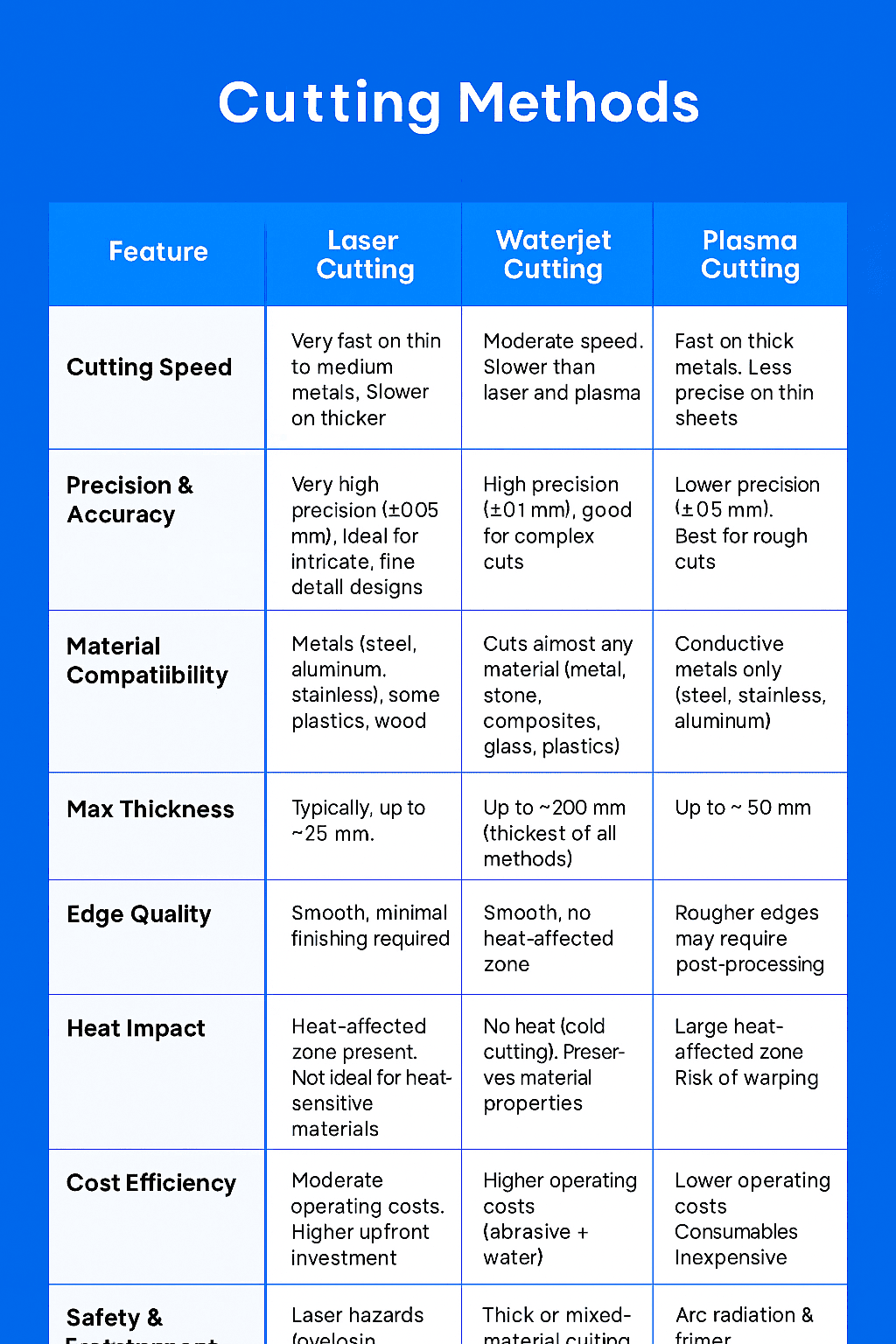
| Feature | Laser Cutting | Waterjet Cutting | Plasma Cutting |
|---|---|---|---|
| Cutting Speed | Very fast on thin to medium metals. Slower on thicker materials. | Moderate speed. Slower than laser and plasma. | Fast on thick metals. Less precise on thin sheets. |
| Precision & Accuracy | Very high precision (±0.005 mm). Ideal for intricate, fine detail designs. | High precision (±0.1 mm); good for complex cuts. | Lower precision (±0.5 mm). Best for rough cuts. |
| Material Compatibility | Metals (steel, aluminum, stainless), some plastics, wood. | Cuts almost any material (metal, stone, composites, glass, plastics). | Conductive metals only (steel, stainless, aluminum). |
| Max Thickness | Typically up to ~25 mm. | Up to ~300 mm (thickest of all methods). | Typically up to ~50 mm. |
| Edge Quality | Smooth, minimal finishing required. | Smooth, no heat-affected zone. | Rougher edges may require post-processing. |
| Heat Impact | Heat-affected zone present. Not ideal for heat-sensitive materials. | No heat (cold cutting). Preserves material properties. | Large heat-affected zone. Risk of warping. |
| Cost Efficiency | Moderate operating costs. Higher upfront investment. | Higher operating costs (abrasive + water). | Lower operating costs. Consumables inexpensive. |
| Best Applications | Precision parts, thin metals, and intricate designs. | Thick or mixed-material cutting, aerospace, glass, stone. | Structural steel, construction, heavy fabrication. |
| Safety & Environment | Laser hazards (eye/skin protection), fumes require extraction. | High water/abrasive waste. Higher environmental impact if not managed. | Arc radiation & fumes. Requires strong ventilation. |
| Cutting Speed | Very fast on thin to medium metals. Slower on thicker materials. | Moderate speed. Slower than laser and plasma. | Fast on thick metals. Less precise on thin sheets. |
| Precision & Accuracy | Very high precision (±0.005 mm). Ideal for intricate, fine detail designs. | High precision (±0.1 mm); good for complex cuts. | Lower precision (±0.5 mm). Best for rough cuts. |
| Material Compatibility | Metals (steel, aluminum, stainless), some plastics, wood. | Cuts almost any material (metal, stone, composites, glass, plastics). | Conductive metals only (steel, stainless, aluminum). |
| Max Thickness | Typically up to ~25 mm. | Up to ~300 mm (thickest of all methods). | Typically up to ~50 mm. |
| Edge Quality | Smooth, minimal finishing required. | Smooth, no heat-affected zone. | Rougher edges may require post-processing. |
| Heat Impact | Heat-affected zone present. Not ideal for heat-sensitive materials. | No heat (cold cutting). Preserves material properties. | Large heat-affected zone. Risk of warping. |
| Cost Efficiency | Moderate operating costs. Higher upfront investment. | Higher operating costs (abrasive + water). | Lower operating costs. Consumables inexpensive. |
| Best Applications | Precision parts, thin metals, and intricate designs. | Thick or mixed-material cutting, aerospace, glass, stone. | Structural steel, construction, heavy fabrication. |
| Safety & Environment | Laser hazards (eye/skin protection), fumes require extraction. | High water/abrasive waste. Higher environmental impact if not managed. | Arc radiation & fumes. Requires strong ventilation. |
Pros & Cons of Each Cutting Method
Laser Cutting:
Pros:
- Works on variety of materials, such as metals, plastics, wood, glass, and even some composites.
- Offers very high precision, up to ±0.1 mm, making it excellent for fine and complex shapes.
- Being a non-contact process, there’s little to no contamination of the material from tools or coolants.
Cons:
- The upfront cost of laser cutting machines is quite high, which may not be practical for smaller workshops.
- While it performs really well on thin sheets, it struggles a bit with very thick materials.
- Energy consumption can be higher compared to traditional cutting methods, which may add to operational costs
Waterjet Cutting:
Pros:
- Can cut almost any material like metals, stone, ceramics, composites, plastics, glass, and more.
- It’s a cold cutting process, so the material properties aren’t affected by heat.
- Doesn’t produce harmful fumes, which makes it safer for operators and a bit more eco-friendly.
Cons:
- Cutting speeds are slower compared to laser and plasma.
- The cost of handling high-pressure pumps, abrasives, and maintenance can be quite high.
- Though the waste is non-toxic, disposing of the water-abrasive sludge needs extra effort and equipment.
Plasma Cutting:
Pros:
- Cutting speed is very high, especially since no preheating is required. This means faster turnarounds and better production rates.
- It can cut through rusty, dirty, or even painted metals without needing a clean surface.
- Works well on all conductive metals including stainless steel, aluminum, brass, and copper.
Cons:
- Consumables like electrodes and nozzles wear out quickly, leading to frequent replacements.
- The process generates loud noise, bright sparks, and fumes, so proper protective gear is a must.
- Precision is lower compared to laser, making it less suitable for very detailed or intricate cuts.
Which Cutting Method is Best for Your Project?
- Laser Cutting: Go for laser if accuracy and smooth, clean finishes are your main priority. It’s best suited for thin to medium sheet metals, as well as non-metal materials like plastics or wood. If you’re looking for CNC laser cutting services, this is the method you want.
- Waterjet Cutting: If you’re dealing with very thick materials or ones that can’t handle heat (like stone, glass, or composites), waterjet is the better option. It might be slower, but it leaves a high-quality finish without affecting material properties.
- Plasma Cutting: Pick plasma when precision isn’t the most important thing, but you need speed and cost-effectiveness. As long as your workpiece is conductive metal, plasma will cut through it fast, even if the surface is dirty, painted, or rusty.
Conclusion
Each cutting method has its own unique benefits: laser for precision, waterjet for versatility, and plasma for speed and cost-effectiveness. For projects that demand fine detail, clean finishes, and high accuracy, CNC laser cutting services stand out as the ideal choice.
If you’re based in Pune and searching for laser cutting near me or reliable metal laser cutting services, CNC laser technology offers the perfect balance of quality, efficiency, and consistency for modern manufacturing needs.
Fabrication services
Fabrication services in Pune
MS Fabrication services in Pune
Steel fabrication services in Pune
Aluminium fabrication services in Pune
SS fabrication services in Pune
Custom fabrication services in Pune
Fabrication work in Pune
Metal fabrication in Pune
Sheet metal fabrication in Pune
Fabrication company in India
Heavy fabrication company in Pune
Heavy fabrication company in India
Heavy engineering companies in India
Fabrication company in India
Steel fabricators in India
SS fabricators in India
MS fabricators in India
Fabrication by Industries
Railways
Energy
Mining
Shipbuilding
Blogs on Fabrication