
Common welding techniques in heavy fabrication
Common welding techniques in heavy fabrication
Heavy fabrication is the backbone of industries such as construction, power generation, oil & gas, mining, shipbuilding, and infrastructure development. At the heart of this fabrication work lies welding-the process that holds massive steel structures together and ensures they can withstand heavy loads, pressure, and long-term service conditions.
From joining thick steel plates to assembling large machine frames and pressure vessels, welding plays a critical role in determining the strength, durability, and reliability of fabricated components.
- However, not all welding methods are suitable for every job. Heavy fabrication involves working with thick materials, long weld seams, and strict quality standards.
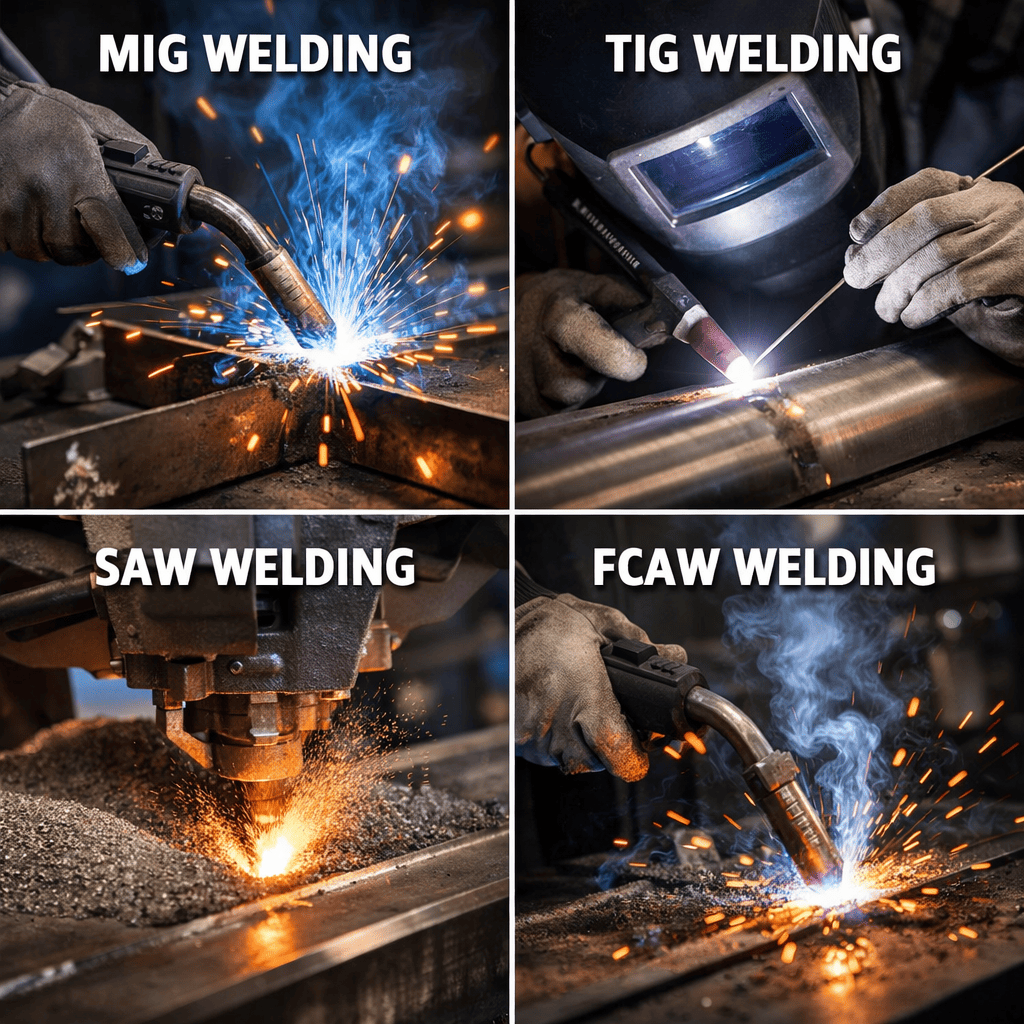
Best fabrication services by Cyclotron Industries. We offer high precision, fast and accurate fabrication solutions for any kind of metal applications
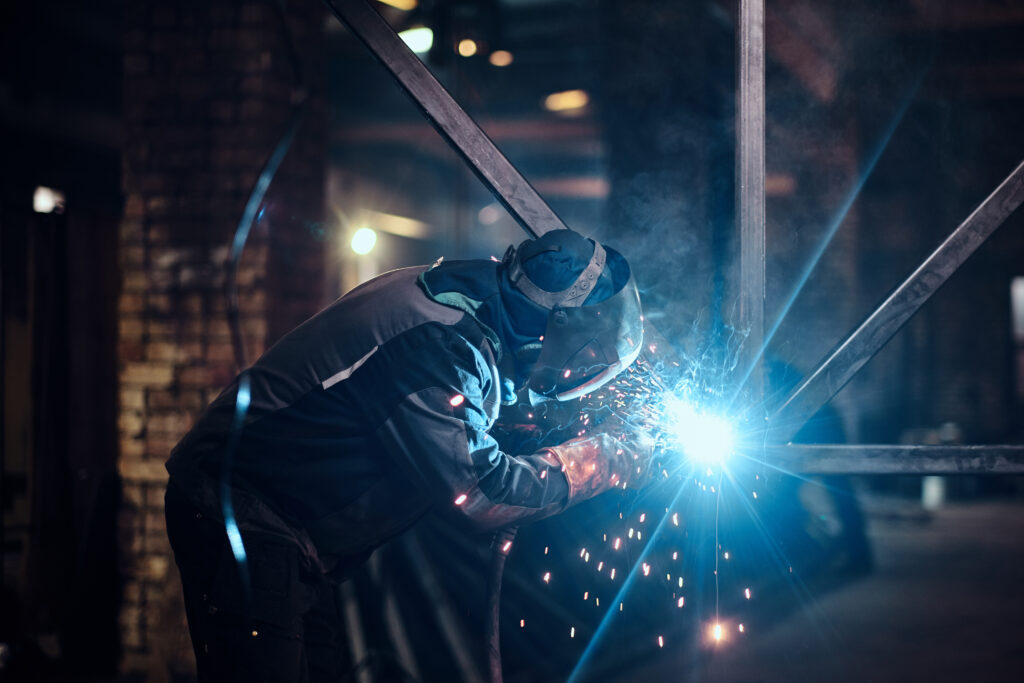
Role of Welding in Heavy Fabrication
Welding is one of the most essential processes in heavy fabrication because it permanently joins metal components into a single strong structure. In heavy fabrication shops, welding is used to assemble thick plates, structural members, beams, columns, machine bases, pressure components, and large industrial assemblies.
Applications of Welding in Heavy Fabrication
Welding types in heavy fabrication are most commonly used to:
- Join thick steel plates used in pressure vessels and tanks
- Assemble structural steel frames, platforms, and supports
- Fabricate heavy machinery frames and equipment bases
- Build beams, girders, and load-bearing structures
- Connect pipes, flanges, and pressure components
Challenges in Heavy Fabrication Welding
Welding thick and heavy materials comes with several challenges:
- High heat input can cause distortion and residual stress
- Controlling weld penetration is critical for joint strength
- Maintaining weld quality over long seams is demanding
- Productivity requirements are high due to large project sizes
To overcome these challenges, fabricators rely on various welding techniques based on job requirements
MIG Welding (Gas Metal Arc Welding – GMAW)
MIG welding, also known as Gas Metal Arc Welding (GMAW), is one of the most widely used welding processes in heavy fabrication. It uses a continuously fed wire electrode and shielding gas to create a stable arc and strong weld.
Why MIG Welding Is Popular in Heavy Fabrication
MIG welding is preferred because it offers a good balance between speed, quality, and ease of operation. It allows welders to complete long welds quickly while maintaining consistent results
Key Advantages of MIG Welding
- High deposition rate, which increases productivity
- Faster welding speed compared to manual processes
- Good penetration for mild steel and structural steel
- Easy to learn and operate, reducing skill dependency
- Highly suitable for automation and robotic welding
Common Applications
MIG welding is widely used for:
- Structural steel frames
- Platforms, walkways, and supports
- General fabrication and assembly work
- Medium-thickness plates and sections
4. TIG Welding (Gas Tungsten Arc Welding – GTAW)
TIG welding, or Gas Tungsten Arc Welding (GTAW), is known for its precision and high-quality welds. Unlike MIG welding, TIG welding uses a non-consumable tungsten electrode and requires more operator control.
Focus on Precision and Quality
TIG welding is commonly used in heavy fabrication when weld quality, appearance, and integrity are critical. It allows precise control over heat input and weld pool size.
Key Benefits of TIG Welding
- Excellent weld quality and appearance
- Superior control over the welding process
- Minimal spatter and clean welds
- Suitable for stainless steel, aluminum, and special alloys
Typical Uses in Heavy Fabrication
TIG welding is often used for:
- Stainless steel components
- Aluminum structures and parts
- Root passes through thick joints
- Critical joints in pressure equipment
Limitations of TIG Welding
- Slower welding speed reduces the productivity
- Requires a higher skill level
- Less suitable for very thick sections
Because of these limitations, TIG welding is usually reserved for precision work rather than high-volume heavy fabrication.
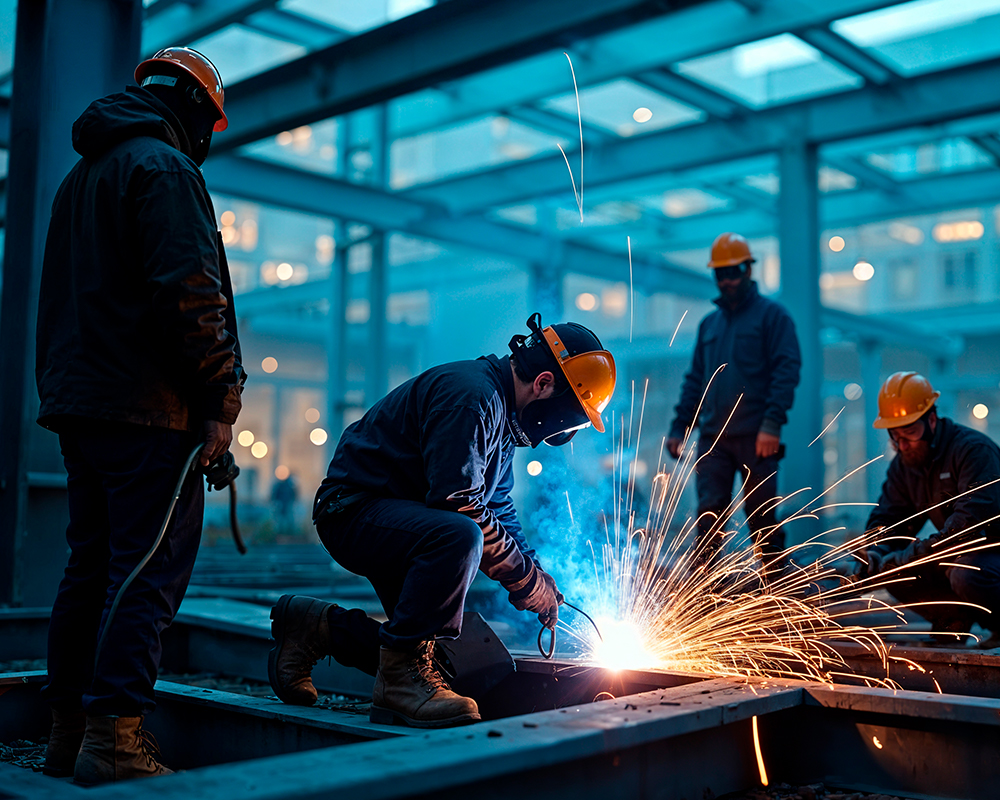
3. SAW Welding (Submerged Arc Welding)
Submerged Arc Welding (SAW) is a heavy-duty welding process specifically designed for thick materials and long, straight weld seams. The welding arc is submerged under a layer of granular flux, which protects the weld from contamination.
Why SAW Is Ideal for Heavy Fabrication
SAW offers extremely high deposition rates and deep penetration, making it one of the most productive welding processes available for heavy fabrication.
Key Advantages of SAW Welding
- Very high deposition rate, ideal for thick plates
- Deep penetration, ensuring strong joints
- Minimal spatter and fumes
- Consistent and uniform weld quality
- Excellent for automation and mechanized welding
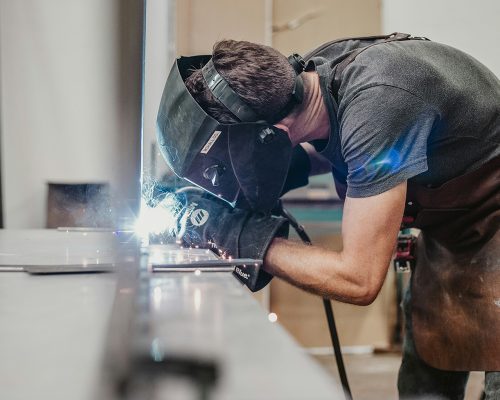
4. FCAW Welding (Flux-Cored Arc Welding)
Flux-Cored Arc Welding (FCAW) is a versatile welding process that combines the high productivity of MIG welding with the strength and penetration of stick welding. It uses a tubular wire filled with flux.
Strength and Flexibility Combined
FCAW is especially popular in heavy fabrication projects where welding conditions are less controlled, such as outdoor or site fabrication work.
Key Benefits of FCAW Welding
- Better penetration than MIG welding for thick sections
- High deposition rate, improving productivity
- Performs well in windy or outdoor environments
- Strong welds suitable for structural applications
Best fabrication services by Cyclotron Industries. We offer high precision, fast and accurate fabrication solutions for any kind of metal applications
Comparison of Welding Techniques for Heavy Fabrication
To better understand the common welding techniques in heavy fabrication, it helps to compare them side by side. Each welding method has its own strengths, limitations, and ideal applications.
The table below highlights the key differences among the major welding processes used in heavy fabrication, making it easier to select the right process for your project.
| Factor | MIG (GMAW) | TIG (GTAW) | SAW | FCAW |
|---|---|---|---|---|
| Speed & Productivity | High speed, high deposition rate | Slow welding speed | Very high productivity | High productivity |
| Weld Quality & Precision | Good quality for structural work | Excellent precision and clean welds | Highly consistent weld quality | Strong structural welds |
| Material Thickness | Medium to thick sections | Thin to medium, root passes | Thick plates and long seams | Medium to thick sections |
| Best Use Cases | Frames, platforms, general fabrication | Stainless steel, aluminum, critical joints | Beams, girders, pressure vessels | Structural fabrication, outdoor welding |
| Key Strength | Fast and easy to automate | Superior control and appearance | Deep penetration and high deposition | Works well in harsh environments |
Welding in Metal fabrication
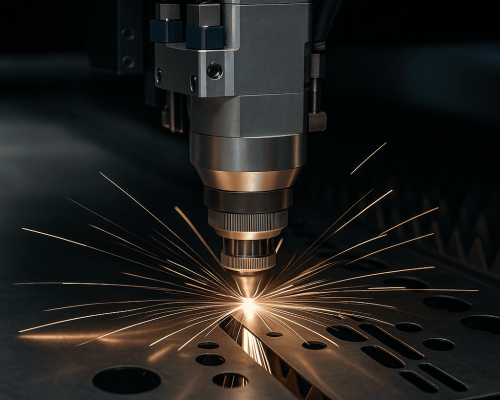
Welding is the most common joining method in metal fabrication. It permanently fuses metal parts together using heat and, in some cases, filler material. Different welding techniques are chosen based on material type, thickness, strength requirements, and production volume.
- MIG Welding
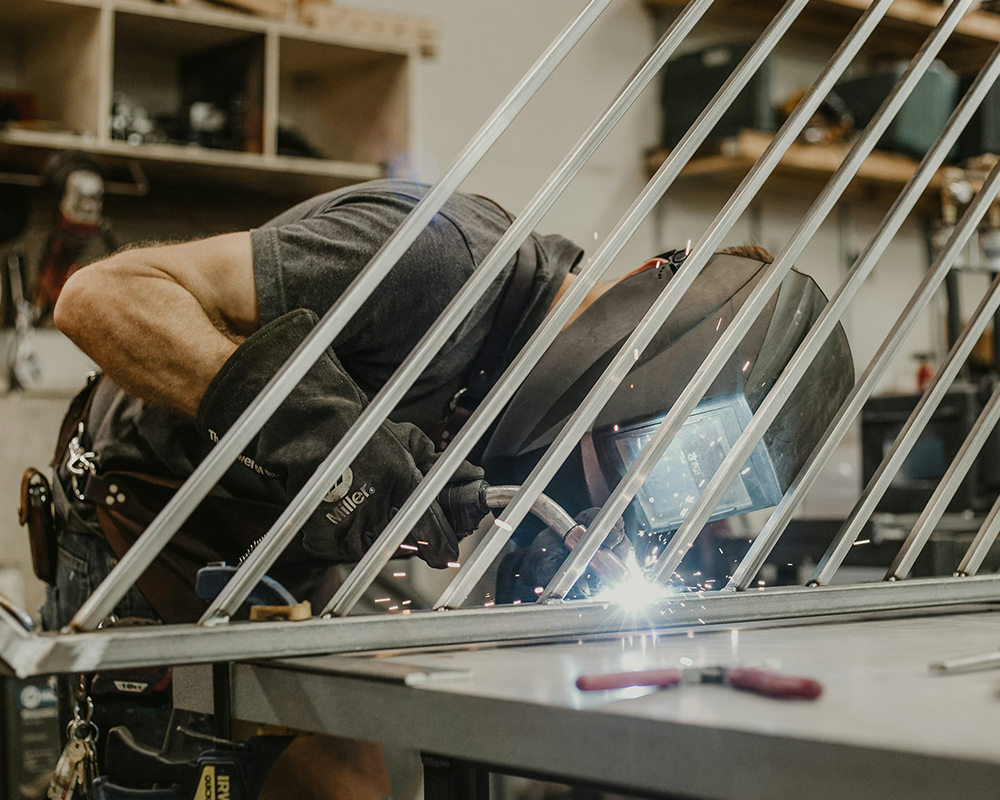
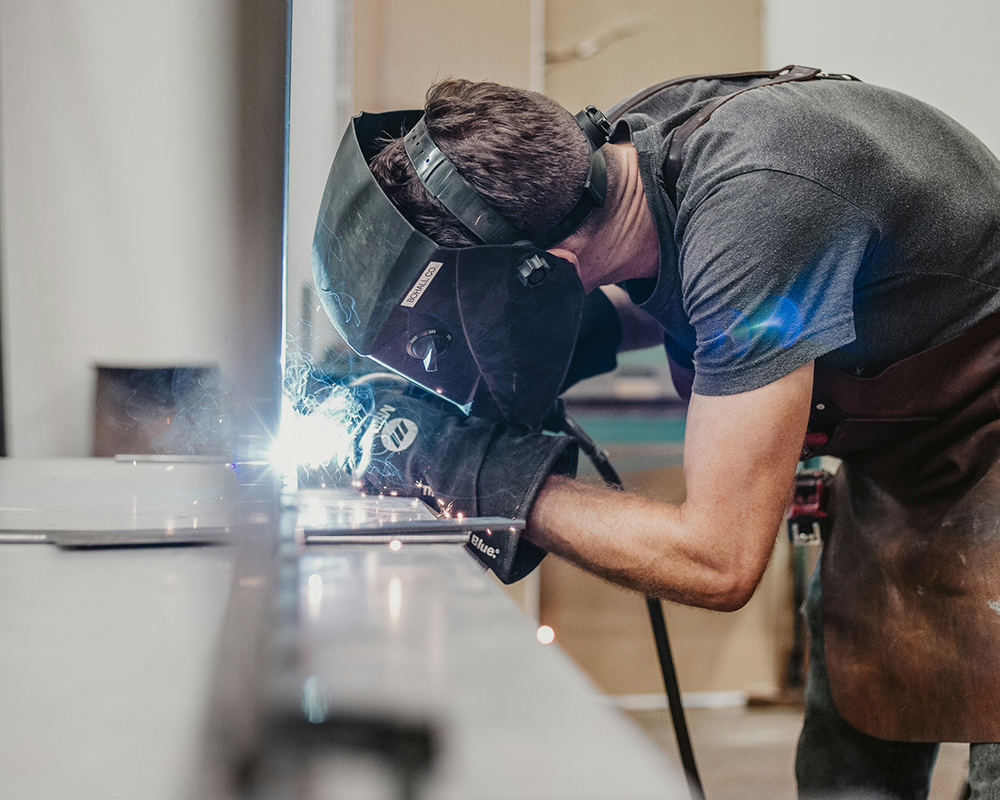
MIG welding is reputed for its speed and ease of operation. It is suitable for mild steel, stainless steel, and aluminum and is commonly used in general fabrication and production work. - TIG Welding
TIG welding offers greater control and produces clean, high-quality welds. It is preferred for thin materials, critical components, and applications where appearance and precision matter. - Stick Welding
Stick welding is robust and versatile, making it suitable for heavy fabrication, outdoor work, and thick materials. It is often used where conditions are less controlled. - Robotic Welding
Robotic welding is used in high-volume and repetitive fabrication jobs. It delivers consistent weld quality, improves productivity, and reduces human error, making it ideal for OEM and industrial production.
- MIG Welding
Conclusion
Welding is the foundation of heavy fabrication, but no single welding technique can meet every requirement. MIG welding offers speed and ease of automation; TIG welding provides precision and superior quality; SAW delivers unmatched productivity for thick plates; and FCAW offers flexibility and strong performance in challenging environments.
The key to successful welding in heavy fabrication lies in selecting the right welding process based on material thickness, structural requirements, quality standards, and production goals. When the correct welding technique is used, it ensures strong joints, long service life, high productivity, and cost-efficient fabrication. Making informed welding choices ultimately leads to safer, stronger, and more reliable heavy fabrication projects.
Cyclotron group clients
Best fabrication services by Cyclotron Industries. We offer high precision, fast and accurate fabrication solutions for any kind of metal applications